
Pricing
Log In
Style*
Background
4tokens•~30s
DND Stat Block Maker
Build DND stat blocks by starting with encounter role, challenge fit, action economy, ability wording, and item limits so the draft is easier to run at the table.
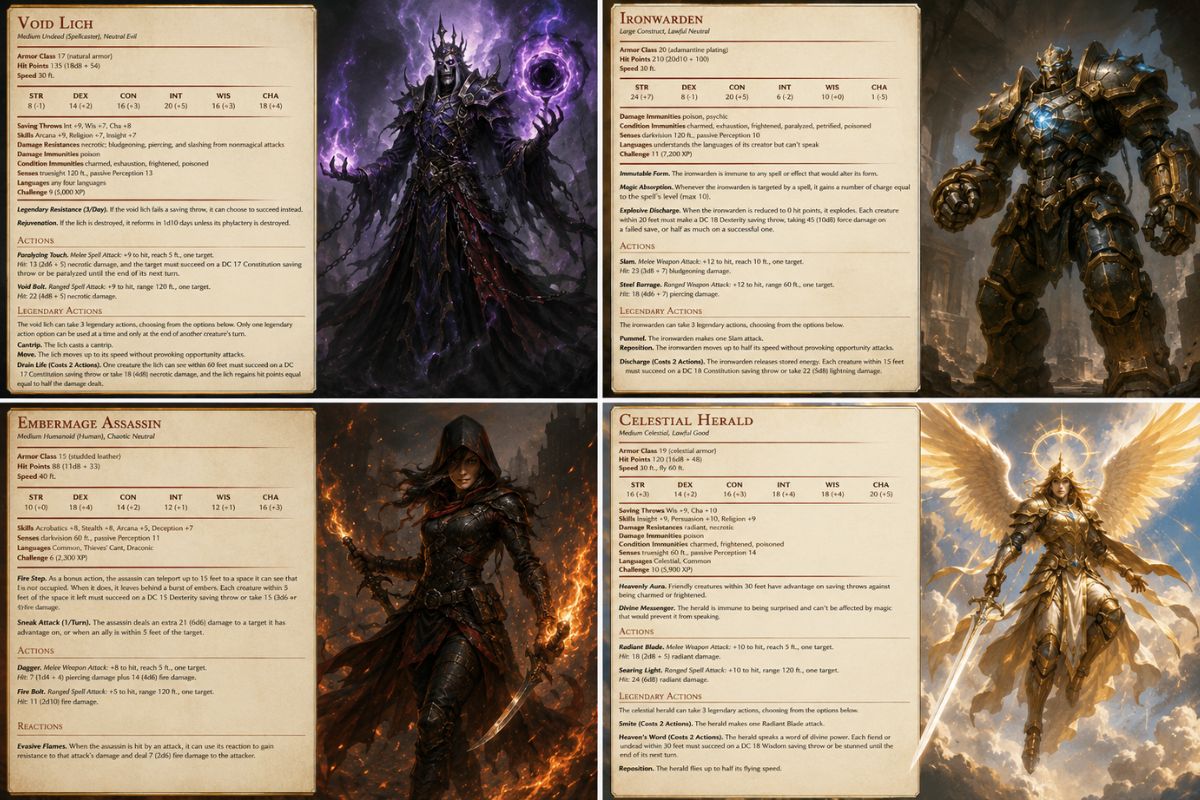
DND Monster, Enemy, and Item Concepts
Preview tabletop directions: a monster concept, an enemy encounter idea, and a magic item visual that can support the stat block without replacing mechanical review.
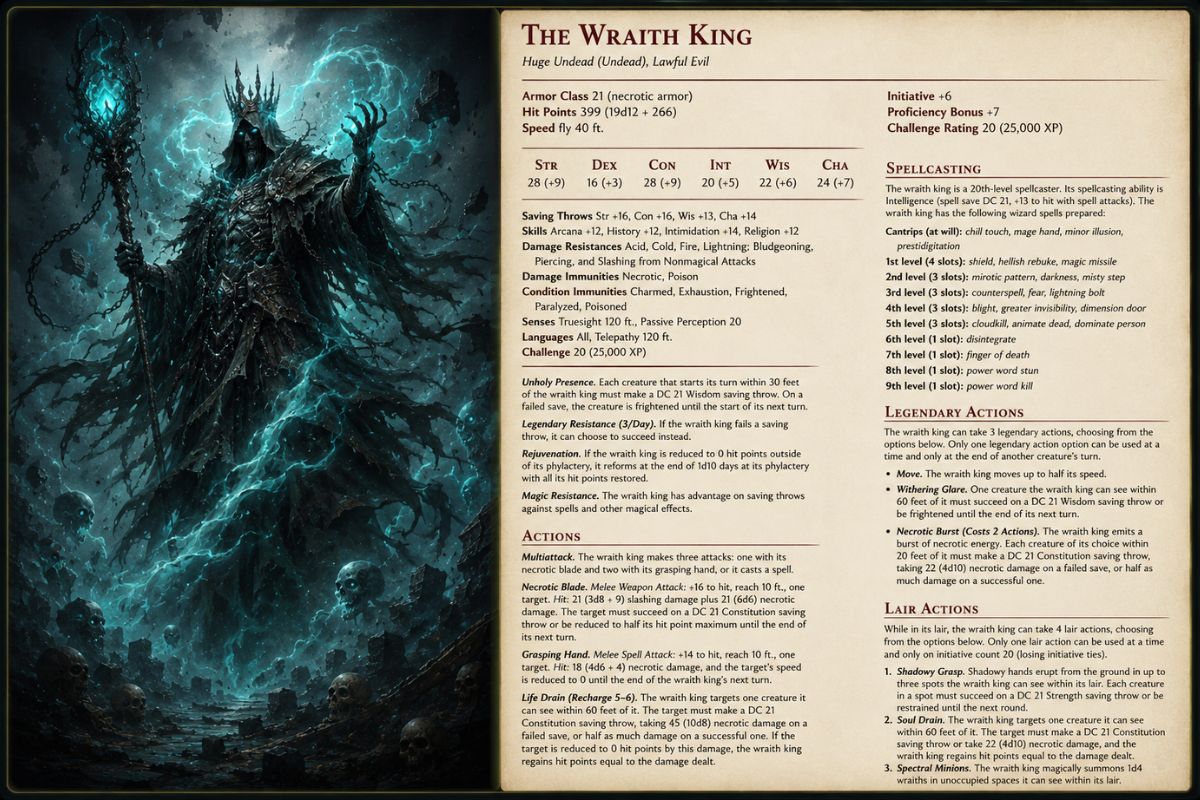
Monster Encounter Concept
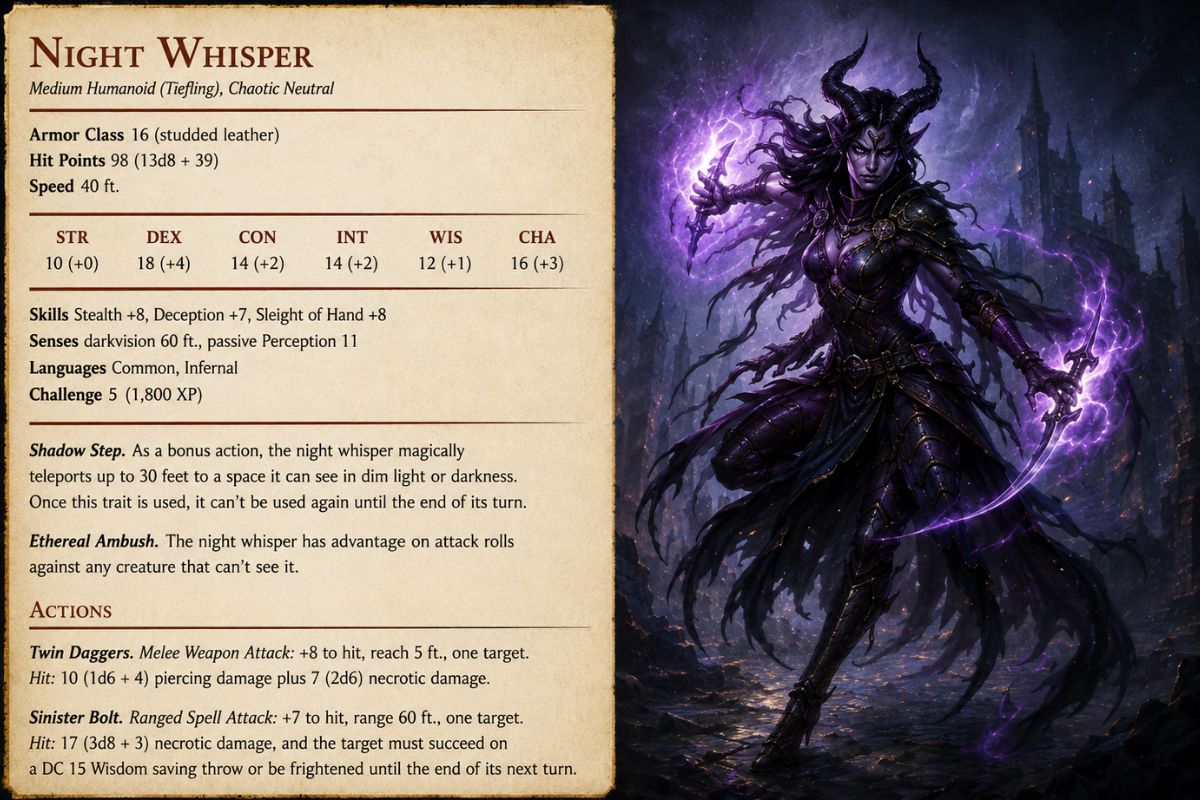
Enemy Role Visual
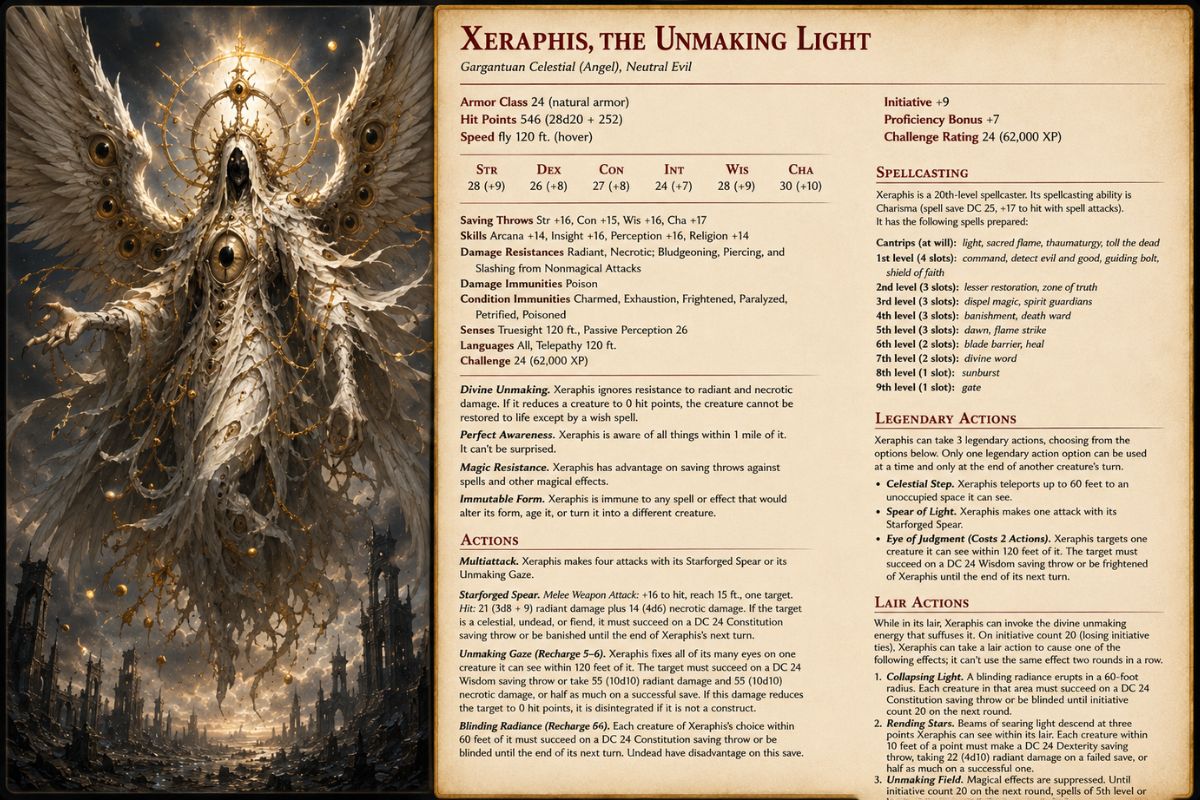
Magic Item Reference
From Encounter Idea to Playable Stat Block
Concept-to-Role Mapping
Start by deciding what the monster, enemy, or item should do during play: pressure the backline, control movement, punish clustering, reward risk, or create a puzzle. OCMaker AI helps structure the draft when the role is clear before numbers are assigned.
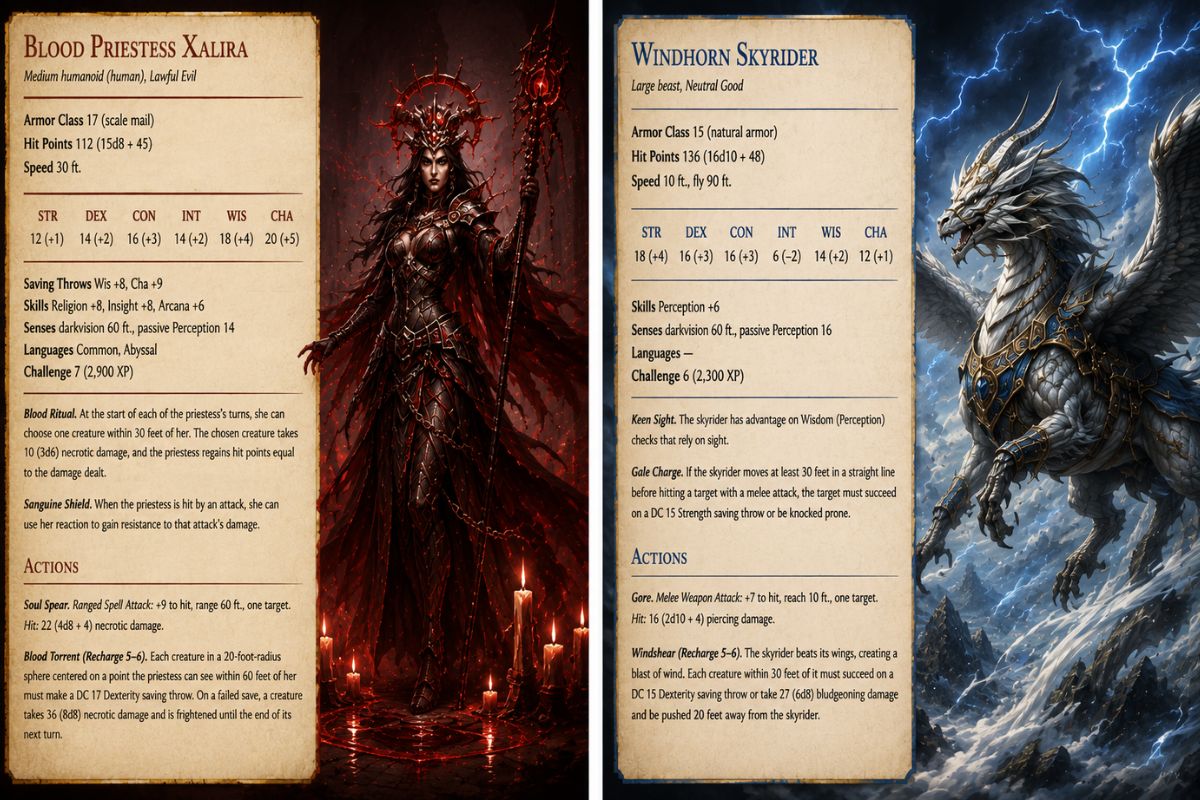
5e Stat Logic Review
A D&D 5e Stat Block Maker output needs more than a cool creature concept. Check armor class, hit points, attack bonus, save DC, damage type, resistances, and action economy against the intended party level, because one overtuned trait can change the whole encounter.
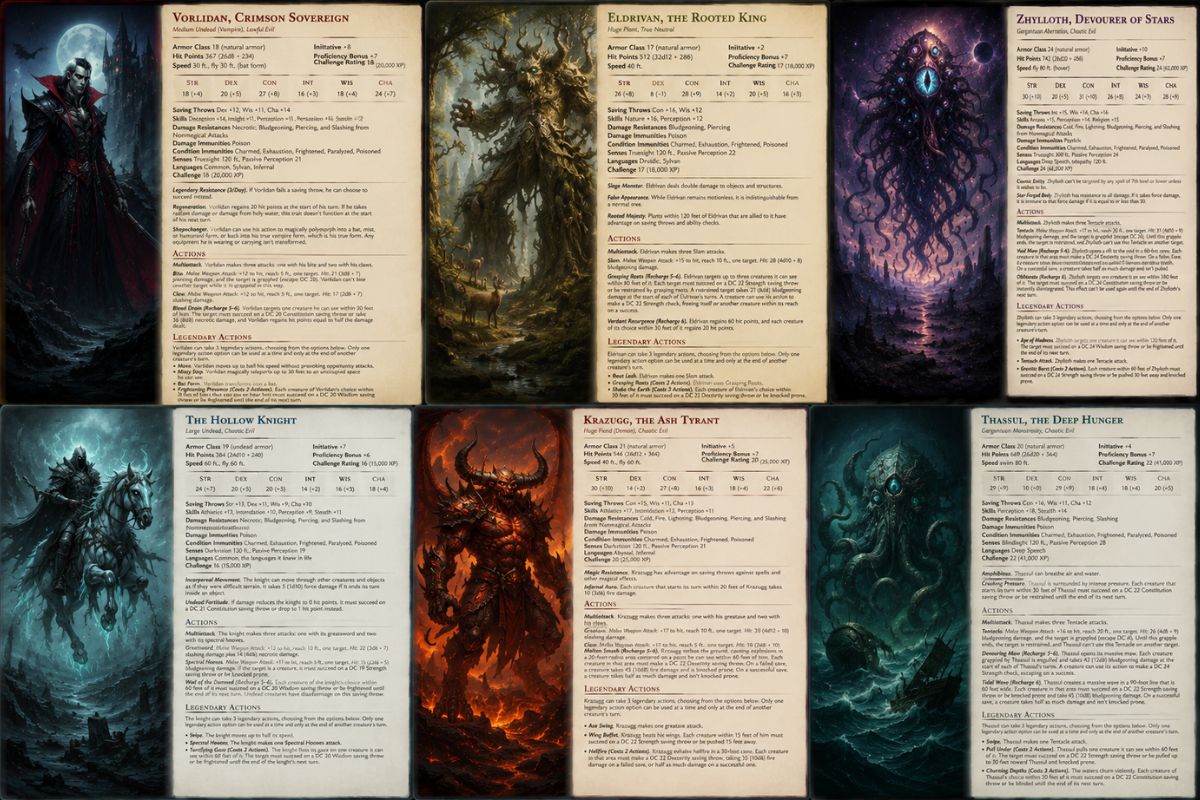
Monster, Enemy, and Item Paths
Use different logic for each stat block type: monsters need actions and survivability, enemies need tactics and encounter role, while items need activation rules, charges, rarity, and limits. That distinction matters more than a single universal homebrew template.
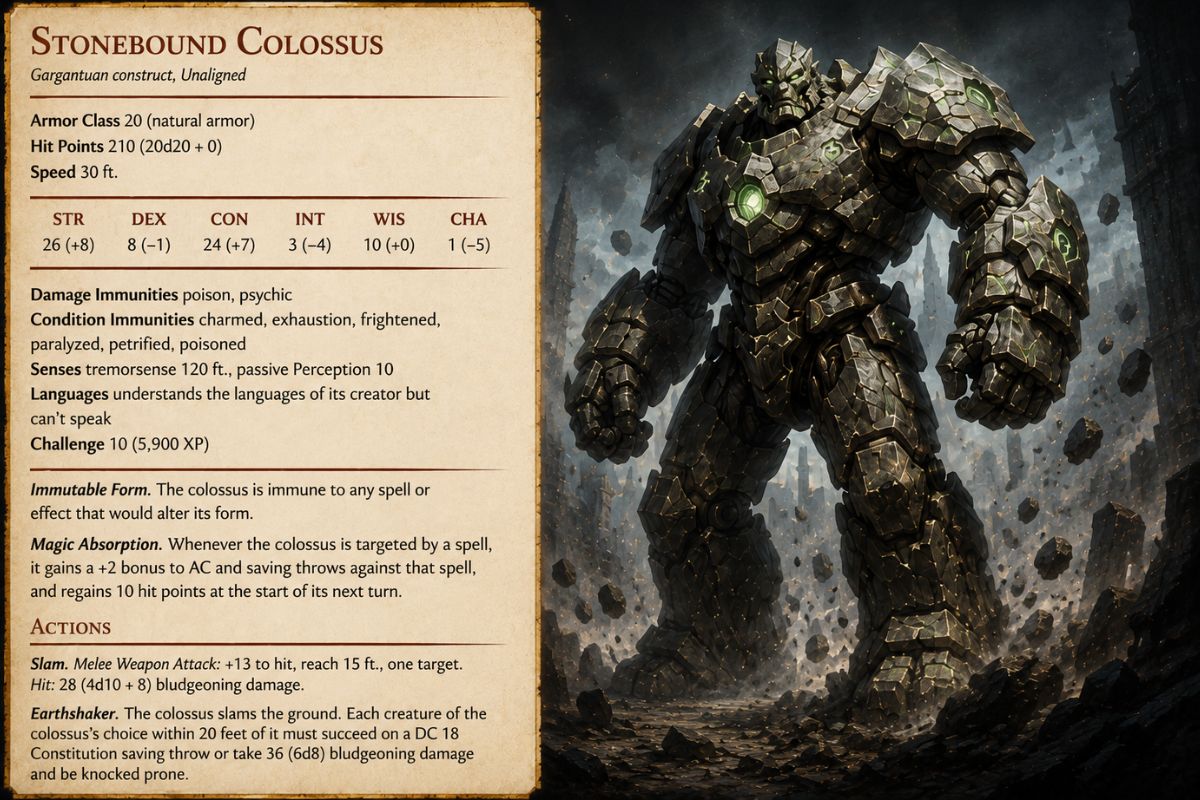
Table-Ready Editing Pass
Before running the block, review wording for trigger clarity, target rules, duration, recharge, and DM workload. The strongest result is a playable draft with tuning handles; the weaker result is flavorful text that still forces the DM to invent mechanics mid-session.
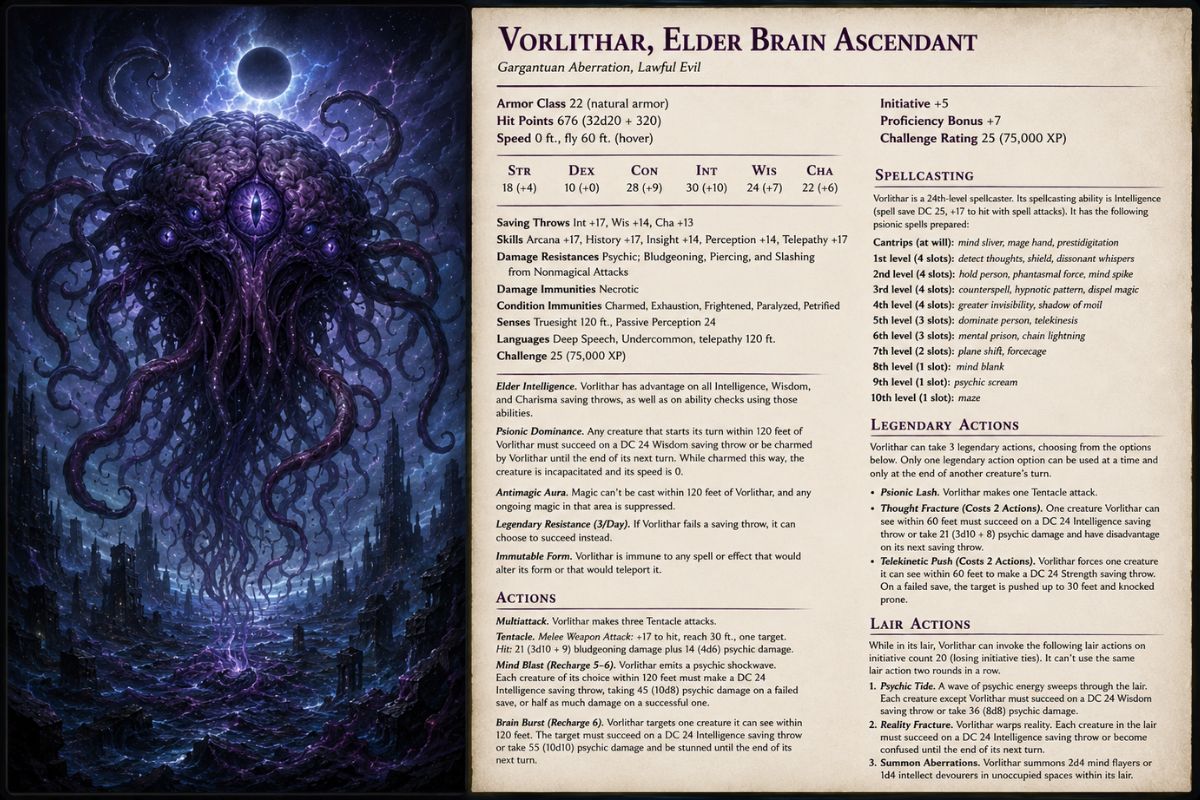
Draft monsters, enemies, and items around role, balance, action economy, and table readability.
Tabletop Design Features for DND Stat Blocks
Encounter Role Before Numbers
Decide whether the stat block is a brute, skirmisher, controller, boss, minion, trap-like hazard, or support enemy before assigning numbers. Role clarity keeps armor class, hit points, damage, mobility, and abilities working toward the same table purpose.
Challenge Fit and Party Context
Balance the draft against party level, number of players, rests, terrain, and expected encounter length. A stat block that looks exciting on paper can still overwhelm the table if action economy, resistances, or burst damage are not reviewed.
Action Economy Clarity
Separate passive traits, actions, bonus actions, reactions, legendary options, and recharge abilities so the DM can run the creature quickly. Clear action structure is often more valuable than adding another complicated special effect.
Ability Text That Plays Cleanly
Write abilities with trigger, range, target, save or attack, damage, condition, duration, and recharge rules. D&D 5e stat block maker users need wording that can be used at the table, not vague monster flavor that requires mid-session interpretation.
Item Limits and Use Cases
For D&D Item Stat Block Maker use cases, define attunement, charges, rarity, activation, duration, and drawback. Magic items feel better when their limits are clear, because players and DMs can understand when the item is exciting without breaking the campaign.
DM Review and Revision Notes
Check whether the final block can be read in under a minute, run without rules confusion, and adjusted if the party overperforms. The best draft gives the DM levers for tuning difficulty instead of locking every number as final.
How to Use DND Stat Block Maker
A focused workflow based on the page intent
01
Define the Use Case
Clarify the output format first: avatar, face crop, creature profile, stat block, item concept, or roleplay reference. The right format changes what details matter.
02
Add Theme-Specific Details
Write the traits that actually separate the subject: identity anchors, expression, markings, pack role, mechanics, abilities, or table-use limits.
03
Review Before Publishing
Check readability, originality, small-detail errors, and whether the result can support the intended profile, sheet, portrait, or tabletop use.
Frequently Asked Questions