
How to Create Anthropomorphic Animals: A Complete Guide
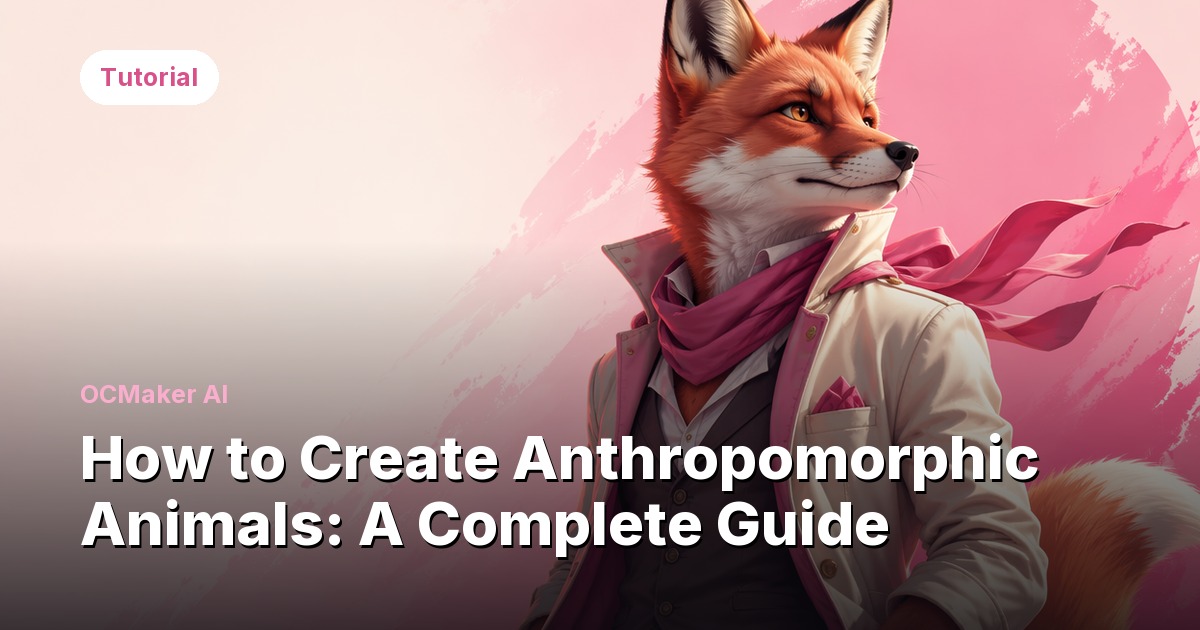
Animal characters have a way of feeling instantly familiar. A fox in a tailored suit suggests something different from a bear in hiking gear or a rabbit in a racing jacket—even before the character says a word. That visual shorthand is one reason anthropomorphic animals appear everywhere from Zootopia and BoJack Horseman to brand mascots, VTuber avatars, games, stickers, and original character art.
Creating a memorable anthro character takes more than placing an animal head on a human body. You need to decide how animal-like the face should remain, how human the posture should feel, what the outfit communicates, and which expression and pose sell the personality.
This guide breaks those decisions into a practical process. You will learn what anthropomorphism means, how related terms differ, what makes an anthro design readable, and how to create a finished character with the OCMaker AI Pet Maker—even if you do not draw.
Quick Answer: How Do You Create an Anthropomorphic Animal?
To create an anthropomorphic animal, choose a species, preserve its most recognizable animal features, give it a readable human-like posture and personality, then add clothing, expression, pose, and an art style that support the concept. A strong description might be: “an upright red fox with an animal head, human-like body proportions, amber eyes, a forest-green bomber jacket, hands in pockets, and a confident three-quarter pose.”
You can draw the character, commission an artist, or use an AI generator. The AI route is the fastest for testing several species, outfits, styles, and poses before choosing a final direction.
What Are Anthropomorphic Animals?
Anthropomorphic animals are animals represented with human characteristics. Those characteristics can include speech, emotion, intention, clothing, jobs, social roles, upright posture, hands, or a human-like body structure. This follows the broader meaning of <a href="https://www.psychologytoday.com/us/basics/anthropomorphism" rel="nofollow">anthropomorphism</a>: attributing human qualities or intent to something nonhuman.
Anthropomorphism is a spectrum rather than one fixed anatomy.
| Level | What changes | Example |
|---|---|---|
| Subtle | The animal stays anatomically animal but shows human emotion or intent | A realistic cat giving a skeptical look |
| Behavioral | The animal talks, works, or acts like a person | A detective dog walking on four legs |
| Upright cartoon | The animal stands on two legs and uses its paws like hands | A rabbit mascot wearing sneakers |
| Full anthro | Animal head and surface features sit on a strongly human-like body | A crocodile in a turtleneck walking through a city |
| Hybrid fantasy | Animal, human, and fantasy anatomy are intentionally combined | A winged toad gentleman or octopus shopkeeper |
There is no single “correct” level. The right one depends on the purpose. A logo may need a simple, readable mascot. A game character may need functional hands and clothing. A realistic pet portrait may keep more of the original animal’s proportions.
Anthro vs. furry vs. cartoon animal vs. mascot
These terms overlap, but they are not interchangeable:
- Anthro is short for anthropomorphic. It describes the design: a nonhuman character with human traits.
- Furry can describe art featuring anthropomorphic animal characters, but it also refers to a fandom and community. <a href="https://furscience.com/whats-a-furry/" rel="nofollow">FurScience</a> describes furries as a diverse community of fans, artists, writers, gamers, and role-players, many of whom create a personal animal avatar called a fursona. An anthro character is not automatically someone’s fursona.
- Cartoon animal describes a visual treatment. A cartoon dog can still behave and move like an ordinary dog, so it is not necessarily fully anthropomorphic.
- Mascot describes a role. A mascot represents a team, brand, event, or community. It can be an anthro animal, a person, an object, or an abstract creature.
A useful shortcut is: “anthro” tells you how the character is designed; “mascot” tells you what the character does; “furry” may refer to the art or the community around it.
Where People Use Anthro Animal Art
Anthropomorphic character art works especially well when a project needs personality at a glance.
Original characters, avatars, and PFPs
An anthro OC can represent you without using your real face. Species, clothing, colors, and expression can communicate a whole persona in one profile image. For small PFP crops, prioritize a clear face, large readable eyes, strong contrast, and a simple background.
Brand mascots and logos
Animals offer immediate associations: owls suggest knowledge, dogs suggest loyalty, foxes suggest cleverness, and bears suggest strength. These are conventions rather than rules, so you can follow them for instant clarity or deliberately reverse them for surprise. A timid lion or scholarly crocodile can be more memorable than the expected stereotype.
Stickers, emotes, and merchandise
Anthro characters can repeat across many reactions without losing identity. Keep the silhouette, face markings, and one signature accessory consistent while changing the expression or pose. Simplified shapes work better than tiny details on stickers, pins, and chat emotes.
Stories, comics, and games
For narrative projects, the design can reveal occupation, social status, movement style, and history. A bird courier might have a compact flight jacket and map case. A mole engineer might wear protective goggles and a tool belt. The outfit should feel useful in the character’s world, not merely decorative.
Personalized pet portraits
A real cat or dog can become a detective, knight, musician, café owner, or fantasy traveler while keeping its coat pattern, eye color, ears, and facial proportions. When likeness matters, start from a clear pet reference and check the generated markings carefully.
Anatomy of a Great Anthro Character: The Design Checklist
The strongest anthropomorphic animals feel like one coherent idea. Use the following checklist before drawing or generating.
1. Species: your fastest personality signal
Species gives viewers an immediate expectation. That expectation can become the foundation of the design:
- Fox: clever, agile, elegant, mischievous
- Bear: grounded, protective, powerful, gentle
- Cat: independent, poised, curious, aloof
- Dog: friendly, loyal, energetic, dependable
- Rabbit: alert, quick, soft, anxious, optimistic
- Crocodile: intimidating, ancient, patient, dryly confident
- Bird: expressive, observant, social, restless, free-spirited
- Octopus: intelligent, mysterious, adaptable, eccentric
Do not stop at the stereotype. Ask what makes this fox or bear different. Species provides the first impression; outfit, posture, and expression create the individual.
2. Fur, feathers, scales, and surface pattern
Surface details determine whether the animal identity survives the humanization.
- Keep signature markings around the eyes, muzzle, ears, chest, or tail.
- Use two or three dominant colors before adding small accents.
- Describe texture clearly: short velvet fur, shaggy coat, glossy feathers, rough scales, translucent skin, or soft quills.
- Place patterns deliberately. “Black ears and a white muzzle” is more controllable than “interesting markings.”
For a real-pet transformation, markings are often more important than the outfit. A perfect suit will not preserve likeness if the face stripe or eye color changes.
3. Face and eyes: human expression without losing the species
The face carries most of the emotional load. Preserve the muzzle, beak, nose, ear shape, eye placement, and species-specific brow structure, then introduce human-readable expression through the eyelids, brows, mouth corners, head tilt, and gaze.
A common failure is pushing the face so far toward human anatomy that it becomes a person wearing animal makeup. To prevent that, specify:
Clearly animal head and muzzle, species-accurate nose and ears, expressive eyes, no human face.
For realism, keep expressions restrained. For stylized 3D or anime, larger eyes and clearer brow shapes can carry stronger emotion.
4. Body type, proportions, and posture
Decide how human the body should read:
- Animal-first: mostly animal anatomy with an upright pose
- Balanced hybrid: animal head, furred or scaled limbs, human-like torso and clothing
- Human-first anthro: strongly human proportions with animal head, tail, paws, or claws
- Chibi: oversized head, compact torso, short limbs
- Heroic: broad shoulders, long legs, strong triangular silhouette
- Soft/approachable: rounded torso, relaxed shoulders, curved silhouette
Think about weight and balance. A heavy bear should not stand like a weightless fashion model unless that contrast is intentional. A bird character may lead with the chest; a reptile may hold the head lower and move with deliberate stillness.
5. Outfit and accessories: where personality becomes specific
Clothing answers questions that species cannot: Where does the character live? What do they do? How do they want to be seen?
Compare these directions:
- Oversized hoodie + canvas sneakers = casual, young, approachable
- Black turtleneck + sunglasses = controlled, cool, slightly intimidating
- Tailored suit + bow tie = formal, precise, confident
- Patched field jacket + satchel = traveler, researcher, survivor
- Neon bomber + headphones = DJ, gamer, nightlife personality
Give the character one signature accessory—a pendant, glasses, scarf, tool, hat, or headphones—rather than ten competing props. Also consider anatomy: clothes need openings or adjustments for wings, tails, shells, horns, or multiple arms.
6. Expression and pose: show the character doing something
“Standing” is rarely enough. Choose a pose that communicates attitude:
- Arms crossed: guarded, confident, skeptical
- Hands in pockets: relaxed, cool, self-contained
- Leaning on a railing: casual, socially confident
- Looking over one shoulder: alert, mysterious, caught in motion
- Crouched with ears forward: curious, ready to spring
- Open stance with raised brows: friendly, welcoming
Expression, pose, and outfit should agree—or conflict on purpose. A cheerful outfit with a tired stare can create humor. A huge crocodile in a delicate cardigan can feel unexpectedly gentle.
7. Art style: match the output to the job
| Style | Best for | Prompt priorities |
|---|---|---|
| Realistic / cinematic | Pet portraits, dramatic OCs, concept art | Natural anatomy, material texture, lighting, lens/framing |
| Stylized 3D | Mascots, social characters, expressive full-body designs | Readable silhouette, polished materials, expressive face |
| Anime | Avatars, OCs, VTuber concepts, illustrations | Clean shapes, eye design, outfit details, color palette |
| Storybook / watercolor | Gentle portraits, children’s stories, gifts | Soft edges, paper texture, warm palette, simple scene |
| Pixel art | Game sprites, icons, retro projects | Limited palette, strong silhouette, simple accessories |
| Sticker / chibi | Emotes, reaction packs, merch | Oversized expression, thick outline, minimal background |
Style names can guide the direction, but descriptive visual language is more reliable than relying only on a studio or franchise name. Describe the rendering, shapes, palette, lighting, and mood you actually want.
Three Ways to Create an Anthropomorphic Animal
Draw it yourself
Drawing offers the greatest control over anatomy, costume construction, and consistency. It is also the most demanding option. You need enough skill to combine animal anatomy with human gesture, then redraw the character across expressions and poses.
Best for: artists building a long-term character sheet or production-ready design.
Commission an artist
A commission gives you a human collaborator who can interpret personality and solve unusual anatomy. Cost and turnaround depend on complexity, revisions, usage rights, and whether you need a portrait, full body, reference sheet, or commercial license.
Best for: a polished final character when you have a clear brief and budget.
Use an AI generator
AI is the fastest way to explore. You can compare a fox and crocodile concept, switch a hoodie to a suit, test realistic versus stylized 3D, or change the background without drawing every version from scratch.
The trade-off is that you still need to direct and review the result. Check hands, paws, eyes, tail placement, clothing openings, repeated accessories, and species consistency. Treat generation as an iterative design process, not a one-click substitute for decisions.
Best for: ideation, PFPs, prompt exploration, pet transformations, mood boards, and fast character variations.
Step by Step: Create an Anthropomorphic Animal with AI
The OCMaker AI Pet Maker combines a structured Builder with a free-form Prompt tab, so you can create a character even when you do not know image-generation syntax.
Step 1: Pick a species
Start with the animal that best supports the role and personality. The current Pet Type list includes familiar pets such as cats, dogs, rabbits, hamsters, birds, and fish, plus foxes, hedgehogs, ferrets, lizards, iguanas, crocodiles, frogs, octopuses, and insects.
If the design feels generic, make the species more precise: red fox instead of fox, green iguana instead of lizard, or black long-haired cat instead of cat.
Step 2: Choose an art style
Select a visual direction before fine-tuning accessories. OCMaker currently presents styles including Modern Anime, Realistic, Studio Ghibli, and Stylized 3D, with additional options available in the style selector.
Use Realistic when texture, fur, scales, and cinematic lighting matter. Use Stylized 3D for expressive, mascot-like characters with readable silhouettes. Use an anime direction for cleaner graphic shapes, larger eyes, and illustration-focused OCs.
Step 3: Build the character details
Use the Builder controls to define the design. Current AI Pet Maker fields include:
- Pet Type
- Fur Color and Fur Pattern
- Eye Color and Age
- Body Type
- Outfit
- Expression and Pose
- Accessories and Features
Work from large decisions to small ones. Set species, body type, and style first; then add face, clothing, and accessories. This prevents small decorative details from competing with the core silhouette.
Step 4: Choose a background
Use Pure White for a clean profile image, sticker base, product-style portrait, or character sheet. Use Auto when you want the generator to build a setting around the character.
For a specific scene, describe it: rainy neon alley, cozy library, warm studio portrait, forest trail, or old stone courtyard. Add lighting and camera direction only after the location is clear.
Step 5: Generate, review, and retry
The current interface labels an AI Pet generation as 4 tokens and approximately 30 seconds; costs and timing can change, so confirm the live interface before a large batch. After generation, review the output at full size:
- Does the animal species read immediately?
- Are both eyes aligned and intentional?
- Do paws, claws, wings, tentacles, and tail connect correctly?
- Does clothing accommodate the anatomy?
- Is the expression consistent with the pose?
- Are there duplicate glasses, jewelry, straps, or limbs?
Use Retry or regenerate after changing one variable. If everything changes at once, you will not know which instruction improved or weakened the result.
Real OCMaker Anthropomorphic Animal Examples
These real AI Pet Maker results show how species, clothing, posture, and style combine into distinct personalities.
1. Confident crocodile in a black turtleneck
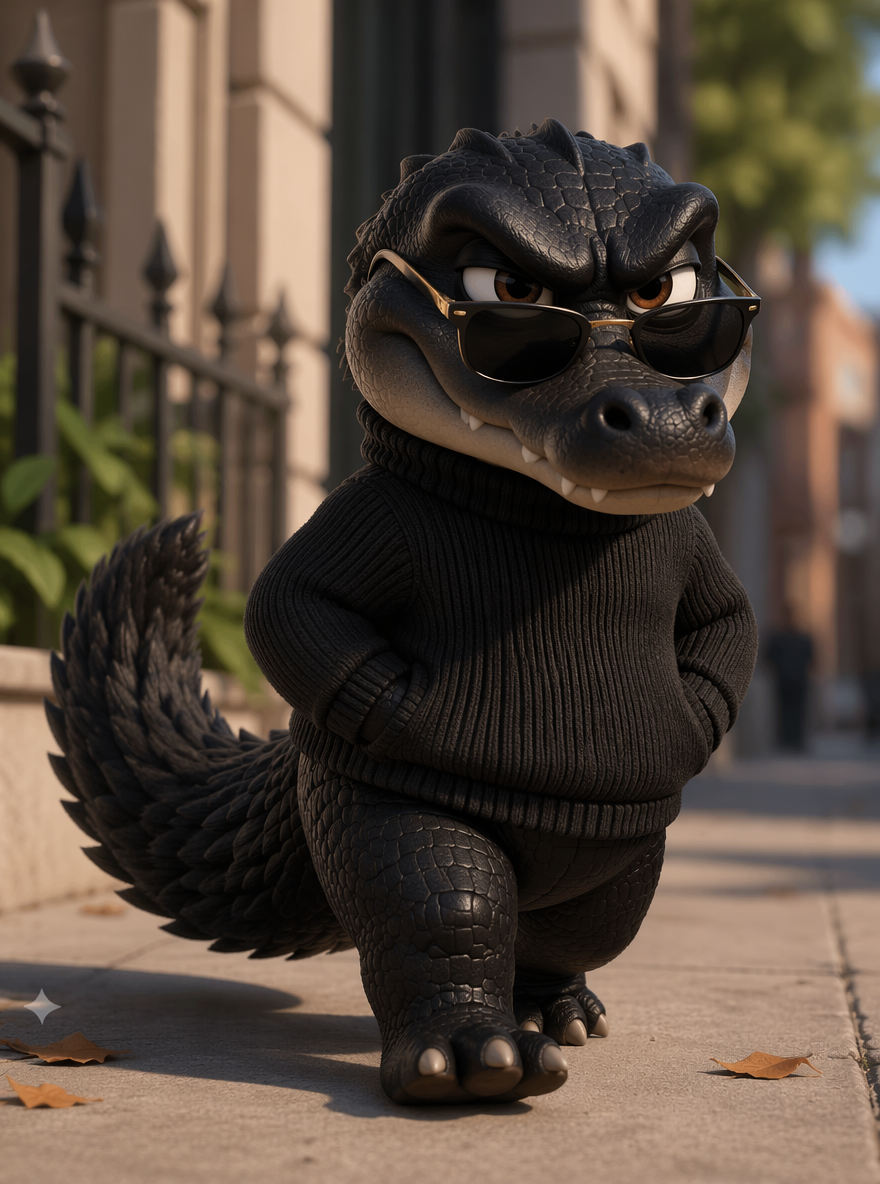
The broad reptilian head, scales, teeth, claws, and spiked tail keep the species unmistakable. A ribbed black turtleneck, sunglasses, hands-in-pockets pose, and low camera angle turn those animal features into a cool, self-assured city character.
2. Eccentric octopus in a knitted cardigan
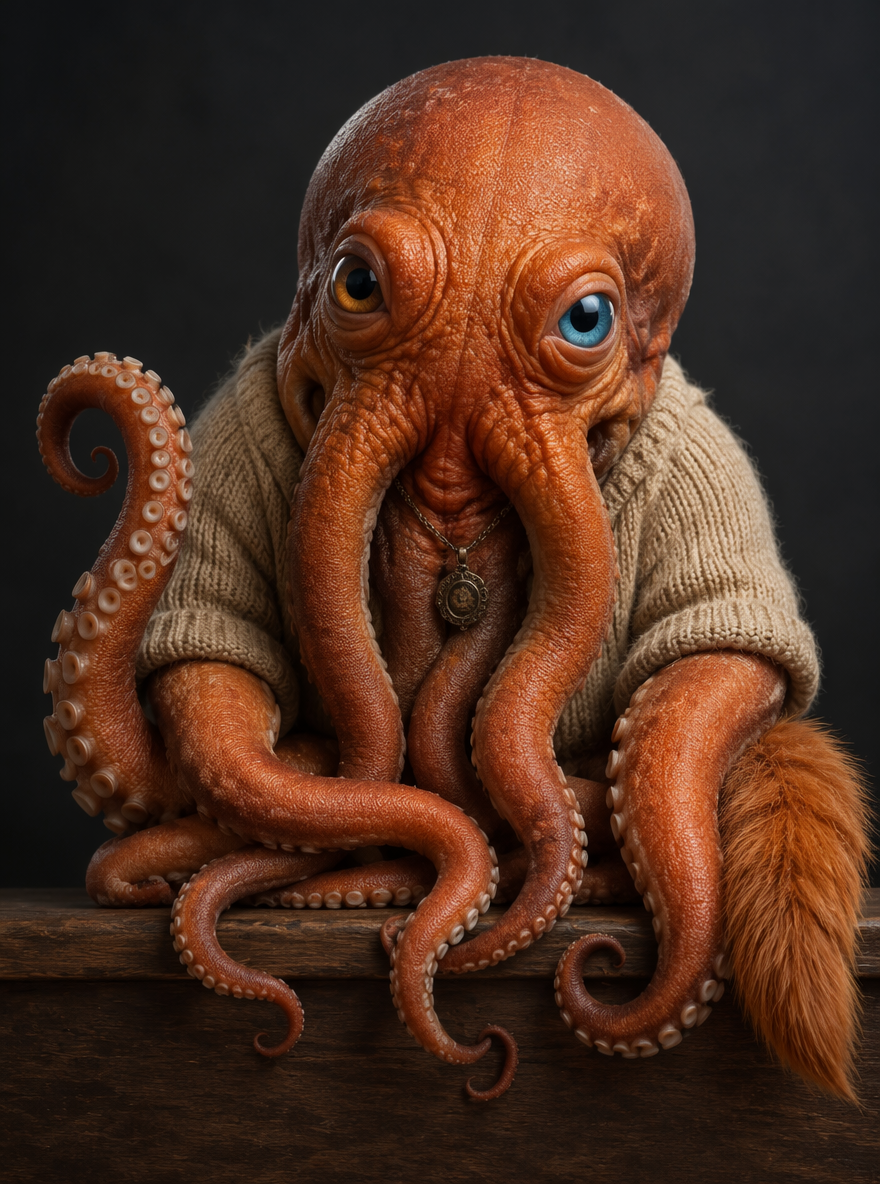
A dark studio background focuses attention on wrinkled orange skin, curling tentacles, mismatched eyes, a chunky cardigan, and an antique pendant. The seated portrait pose makes the unusual anatomy feel composed and character-driven rather than random.
3. Formal cat character in a three-piece suit
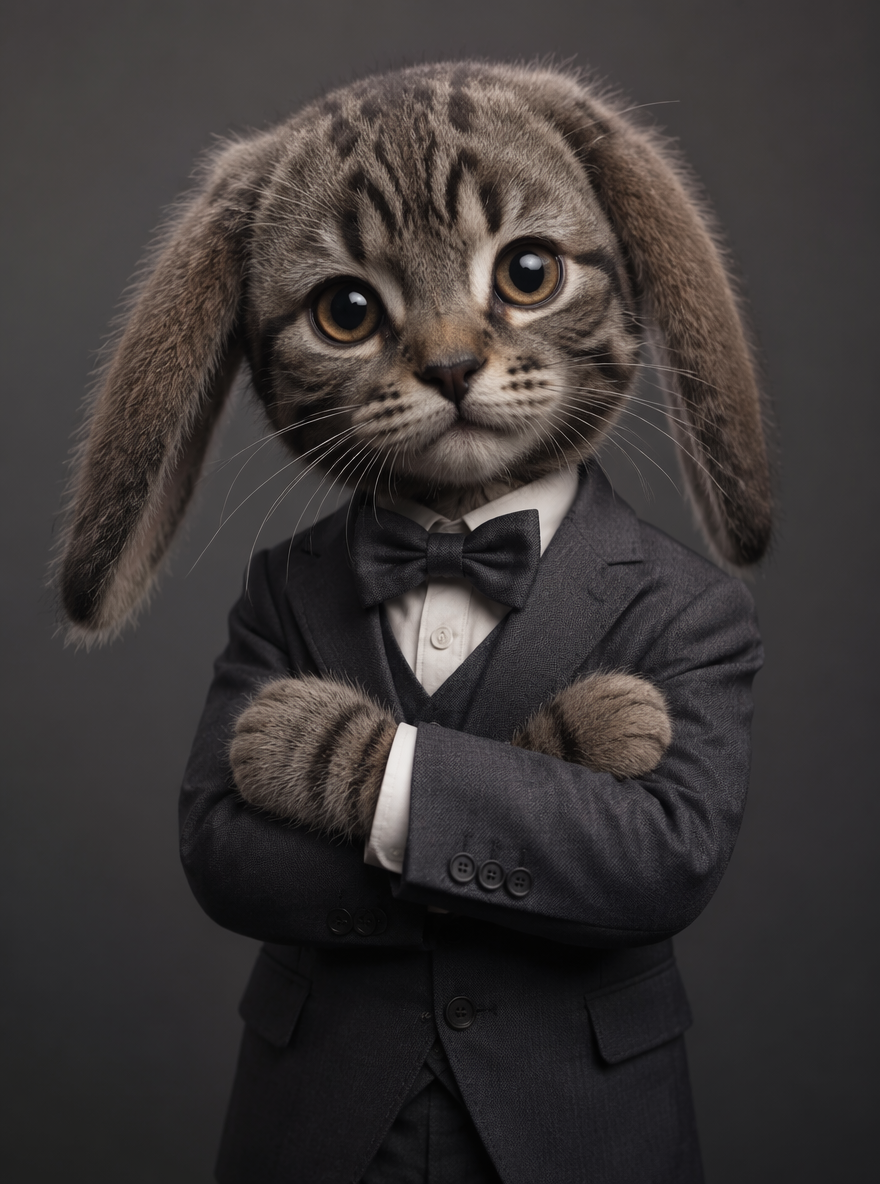
The tabby face, whiskers, plush fur, and large ears preserve the animal identity, while crossed arms, a fitted suit, waistcoat, and bow tie add a formal human persona. The plain studio background also makes the design effective as a PFP or character portrait.
4. Winged toad gentleman in a courtyard
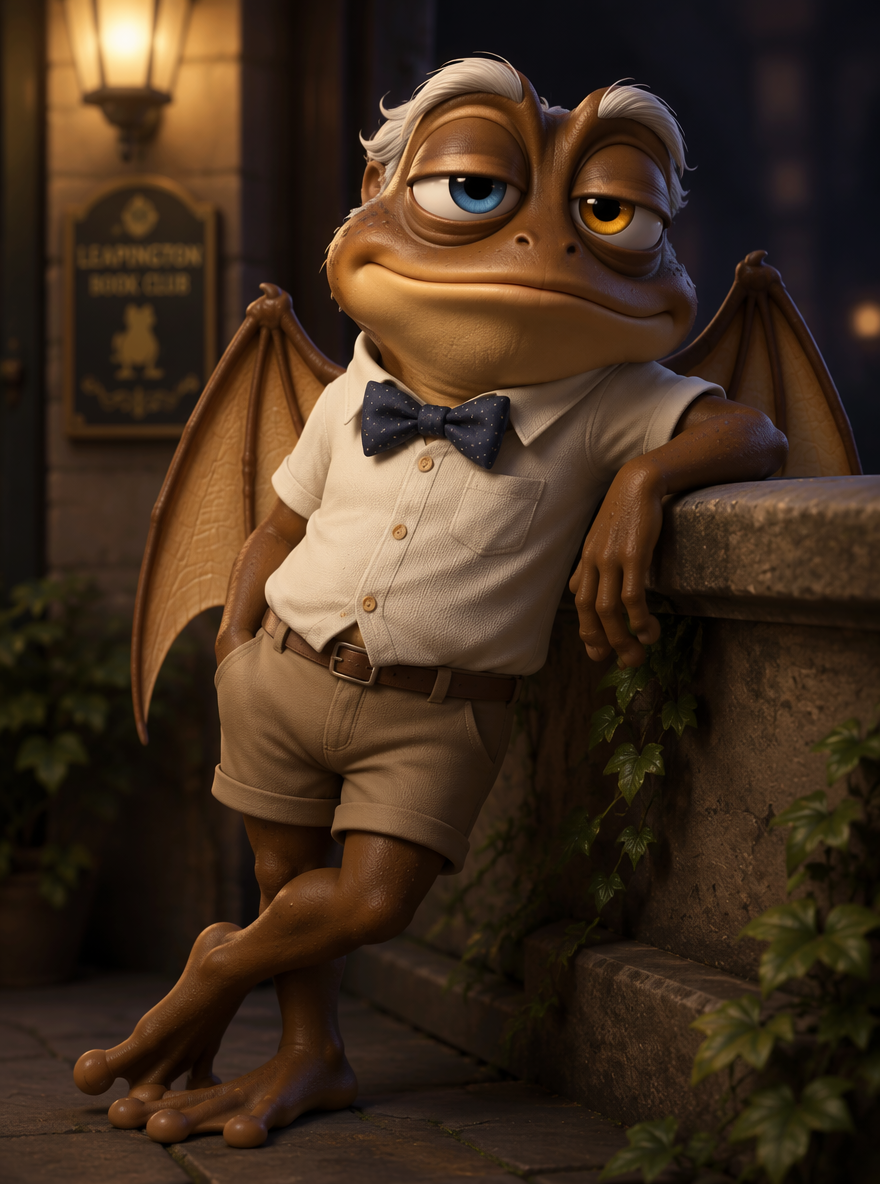
This design mixes a toad’s textured skin and splayed feet with swept-back hair, a shirt, bow tie, tailored shorts, and relaxed human body language. The crossed ankles and elbow resting on the stone railing sell the character’s calm, slightly smug personality.
Prompt and Configuration Tips for Better Results
Use a repeatable prompt formula
A reliable structure is:
[species] + [anthro anatomy] + [surface details] + [eyes/expression] + [body type] + [outfit/accessory] + [pose] + [style] + [background/lighting]
Example:
Full-body anthropomorphic red fox, clearly animal head and muzzle on a human-like athletic body, rust-red fur with a white muzzle and tail tip, amber eyes, confident expression, forest-green bomber jacket and black cargo pants, hands in pockets, three-quarter standing pose, polished stylized 3D character render, clean warm-gray studio background.
Say how human the body should be
Words like “anthropomorphic” can produce different levels of humanization. Add one of these:
- animal anatomy standing upright
- balanced animal-human hybrid anatomy
- animal head on a human-like clothed body
- human torso and posture with furred limbs, paws, and tail
- chibi anthro proportions with an oversized animal head
If the face becomes too human, add: “species-accurate animal face, no human skin, no human nose.”
Match the style to the intended use
- For a realistic pet portrait: detailed fur, natural eyes, soft studio light, accurate markings.
- For a mascot: bold silhouette, limited colors, friendly expression, simple shapes.
- For a game concept: functional clothing, full-body turnaround feel, readable equipment.
- For a PFP: chest-up crop, centered face, clear eyes, simple background.
- For a story scene: active pose, environment, props, and directional lighting.
Change one variable at a time
Keep the species, face, and body concept stable while testing outfits. Keep the outfit stable while testing expressions. Once the design works, test backgrounds. Controlled iteration is faster than rewriting the entire prompt after every result.
Use negative constraints sparingly
A short correction list can help:
no extra limbs, no duplicated accessories, no human face, no text, no logo
Do not attach a long paragraph of negatives. Too many restrictions can compete with the main concept.
12 Anthropomorphic Animal Ideas to Try
Copy these as starting points, then remix the species, palette, outfit, or setting.
- Grumpy crocodile minimalist — Anthropomorphic black crocodile in a ribbed turtleneck and gold-rimmed sunglasses, hands in pockets, low-angle city portrait, cinematic stylized 3D.
- Hedgehog nightclub DJ — Small upright hedgehog wearing oversized headphones and a purple bomber jacket, one paw on a mixer, neon club lighting, playful 3D animation style.
- Fox botanist — Slender red fox with round glasses, rolled-sleeve field shirt, plant satchel, holding a notebook in a greenhouse, warm storybook illustration.
- Bear pastry chef — Gentle brown bear in a flour-dusted apron and chef hat, carrying a tray of tiny pastries, cozy bakery interior, soft stylized realism.
- Raven private detective — Tall black raven with folded wings, charcoal trench coat and red tie, standing under a rainy streetlamp, graphic noir comic style.
- Tabby cat executive — Gray tabby cat in a tailored three-piece suit and bow tie, arms crossed, dark studio portrait, detailed realistic fur.
- Octopus antique dealer — Rust-orange octopus in a chunky cardigan and bronze pendant, tentacles arranging curious objects, moody fantasy portrait.
- Rabbit streetwear designer — Long-eared white rabbit in layered techwear, sketchbook under one arm, relaxed stance in a clean design studio, modern anime style.
- Winged toad professor — Brown toad with small dragon wings, cream shirt, patterned bow tie, one hand in a pocket, leaning against an old stone railing, cinematic 3D.
- Wolf mountain guide — Silver wolf in a weathered hiking jacket, map case and climbing rope, alert stance on a snowy ridge, realistic adventure concept art.
- Parrot café owner — Bright macaw in a linen vest and rolled sleeves, polishing a cup behind a tropical café counter, colorful editorial illustration.
- Axolotl space mechanic — Pink axolotl with translucent gills, compact utility jumpsuit and tool belt, repairing a small rover, cheerful retro-futurist cartoon style.
To remix an idea, change only one category at first: swap the species, then the outfit, then the art style. This keeps the concept understandable while giving you many variations.
Common Mistakes to Avoid
Overloading the prompt
“Cyberpunk medieval cottagecore astronaut detective” creates several competing centers. Pick one role, one style family, one outfit direction, and one setting. Add complexity after the basic character works.
Losing the animal identity
If the result looks like a human with ears, reinforce the muzzle, nose, jaw, fur or scales, paws, tail, and species-specific silhouette. If it looks like an ordinary animal in clothes, ask for a human-like torso, upright posture, expressive hands or paws, and a deliberate pose.
Ignoring the silhouette
A character should still be recognizable in shadow. Ears, horns, wings, tail, hairstyle, jacket shape, and stance all contribute. Avoid letting the outfit hide every species-specific feature.
Treating accessories as decoration only
A random sword, necklace, and headset do not create personality. Choose props that support the role. A botanist needs a field notebook; a courier needs a bag; a DJ needs headphones.
Choosing the wrong style for the goal
A sticker prompt will not automatically produce a convincing realistic pet portrait. Define the output before you generate, then match the style, framing, detail level, and background to it.
Failing to inspect anatomy
Look closely at paws, fingers, tentacles, wings, tails, glasses, and clothing seams. Regenerate or edit visible problems before using the image as a final asset.
FAQ
What is the difference between anthro and furry art?
“Anthro” describes nonhuman characters with human traits. “Furry art” commonly features anthropomorphic animal characters and is associated with the furry fandom, but not every anthro mascot, cartoon animal, or commercial character is a fursona or fandom work.
Can I turn my own pet into an anthropomorphic character?
Yes. Start with a clear photo and preserve identifying traits such as coat pattern, eye color, ear shape, muzzle length, and distinctive markings. Then specify the human-like body, outfit, expression, role, and art style. Review the result carefully because small marking changes can weaken the likeness.
What is the best AI tool for anthropomorphic animals?
The best tool is one that lets you control both animal identity and human-like character details. OCMaker’s AI Pet Maker is a practical option because it provides species, fur, eyes, body type, outfit, expression, pose, accessories, features, background, and style controls alongside a free-form prompt.
Is the OCMaker AI Pet Maker free?
OCMaker may provide free credits or limited trial generations depending on the current product setup. The AI Pet Maker interface currently shows 4 tokens for a generation, but costs may change. Check the live pricing page and the generator before starting a large batch.
Can I use OCMaker images commercially?
OCMaker’s current paid-plan pricing information lists Full Commercial Use as a benefit. Commercial use still depends on the active plan and Terms of Service, as well as your rights to any uploaded image, likeness, logo, or existing character referenced in the prompt. For client work, products, ads, or merchandise, confirm the current plan terms and keep the design original.
How do I keep the animal head and human body?
State the anatomy directly: “clearly animal head with species-accurate muzzle and ears, attached to a human-like clothed torso and upright body, furred limbs and paws, no human face.” Then reinforce the result with a full-body pose and clothing that makes the torso readable.
What background is best for an anthro PFP?
Use white, gray, or a simple color gradient with strong contrast against the fur or clothing. Keep the crop close enough for the eyes and expression to remain readable inside a small circular avatar.
Create Your Own Anthropomorphic Animal
A strong anthro design begins with seven decisions: species, surface pattern, face, body type, outfit, expression and pose, and art style. Make those choices support one clear personality, then iterate instead of trying to solve everything in one prompt.
Ready to build yours? Create an anthropomorphic animal with the OCMaker AI Pet Maker, compare styles and outfits, refine the details, and generate a character you can use for an OC, avatar, mascot concept, story, or pet-inspired portrait.