
Pricing
Log In
Style*
Background
4tokens•~30s
Doki Doki Literature Club OC Maker
Create a new literature-club member with an expressive anime portrait, coordinated school outfit, signature poem motif, and visual-novel-ready pose. Build a fan-made character concept that feels at home in a deceptively cheerful classroom while keeping the identity your own.
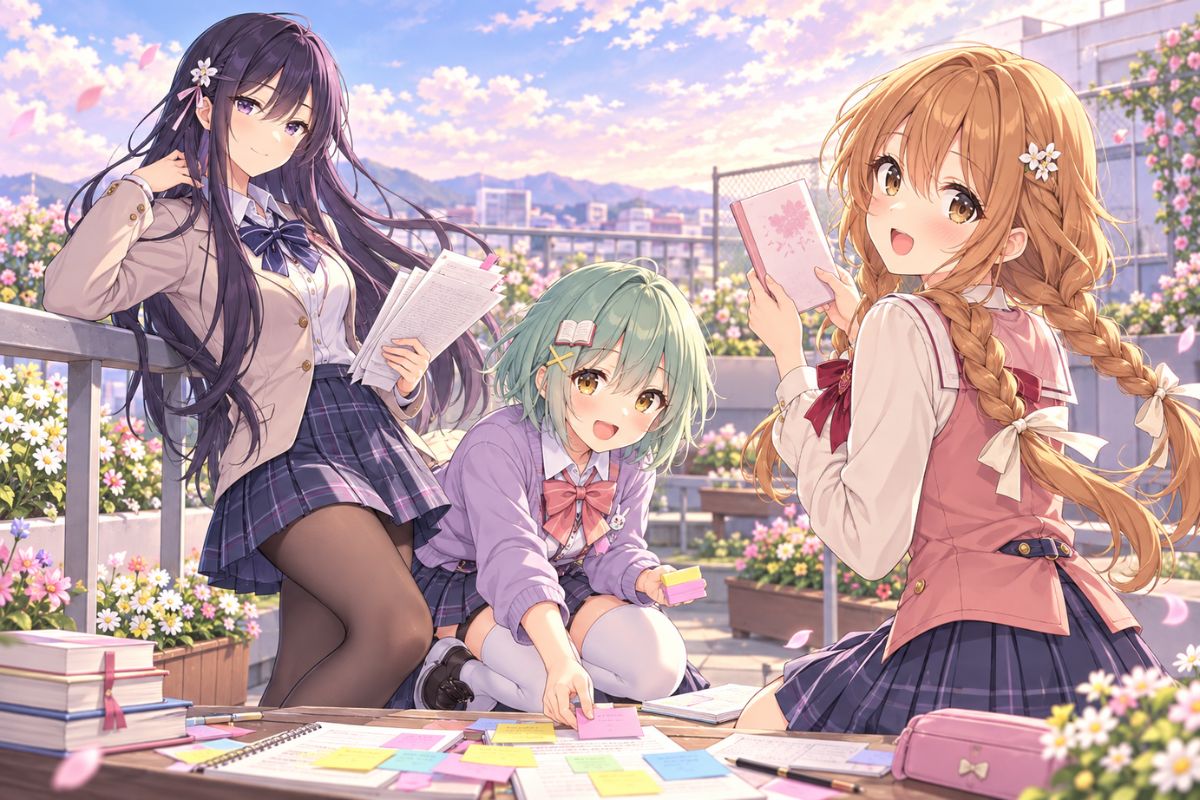
Original Literature Club Character Ideas
Explore three club roles with different moods, silhouettes, writing habits, and visual-novel scene potential.
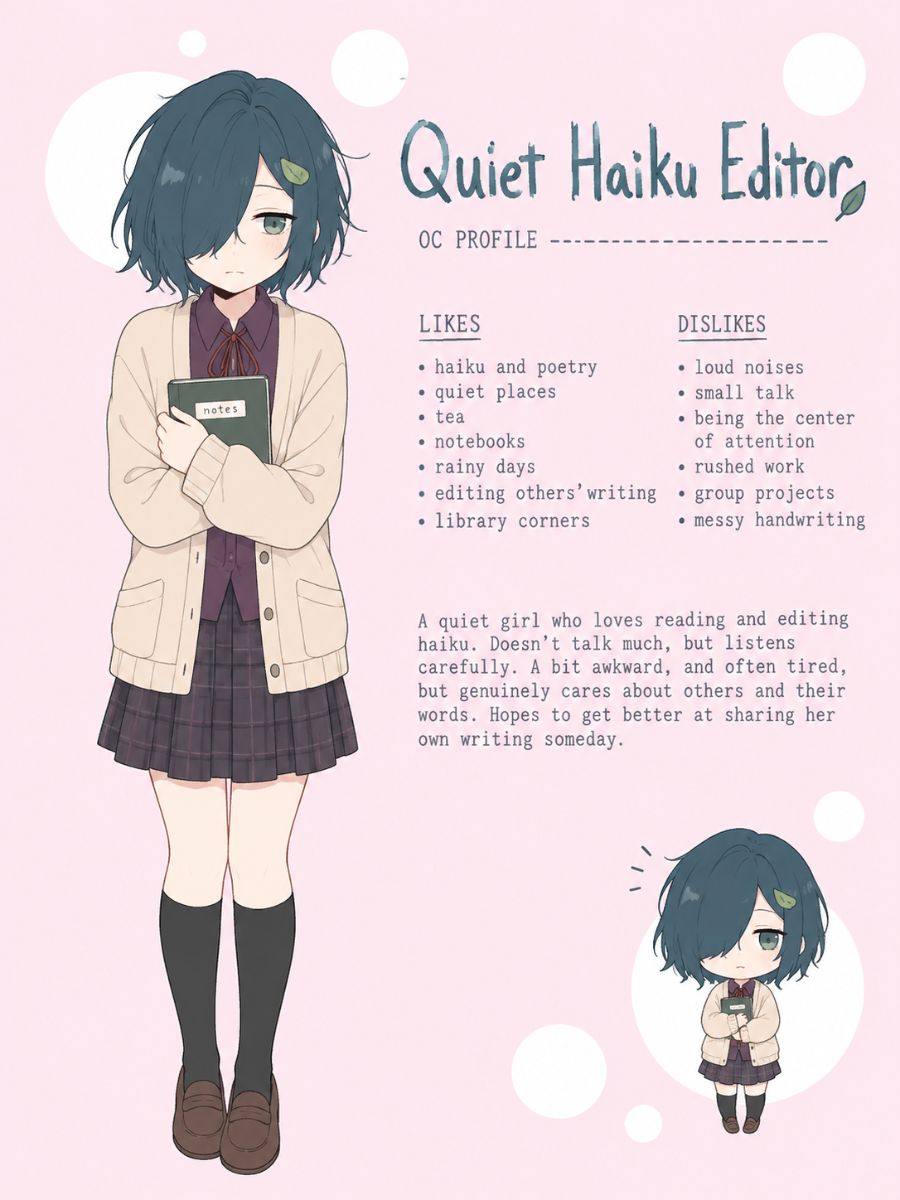
Quiet Haiku Editor
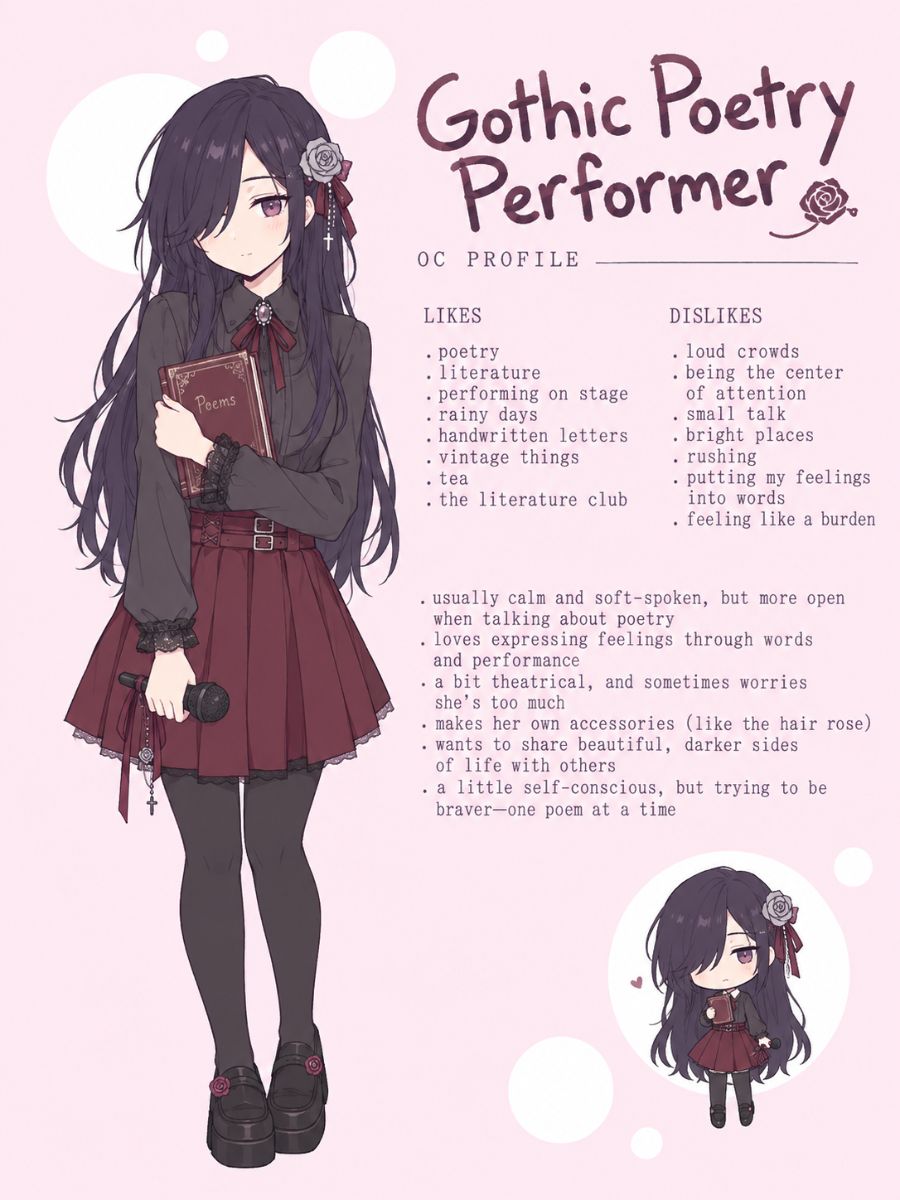
Gothic Poetry Performer
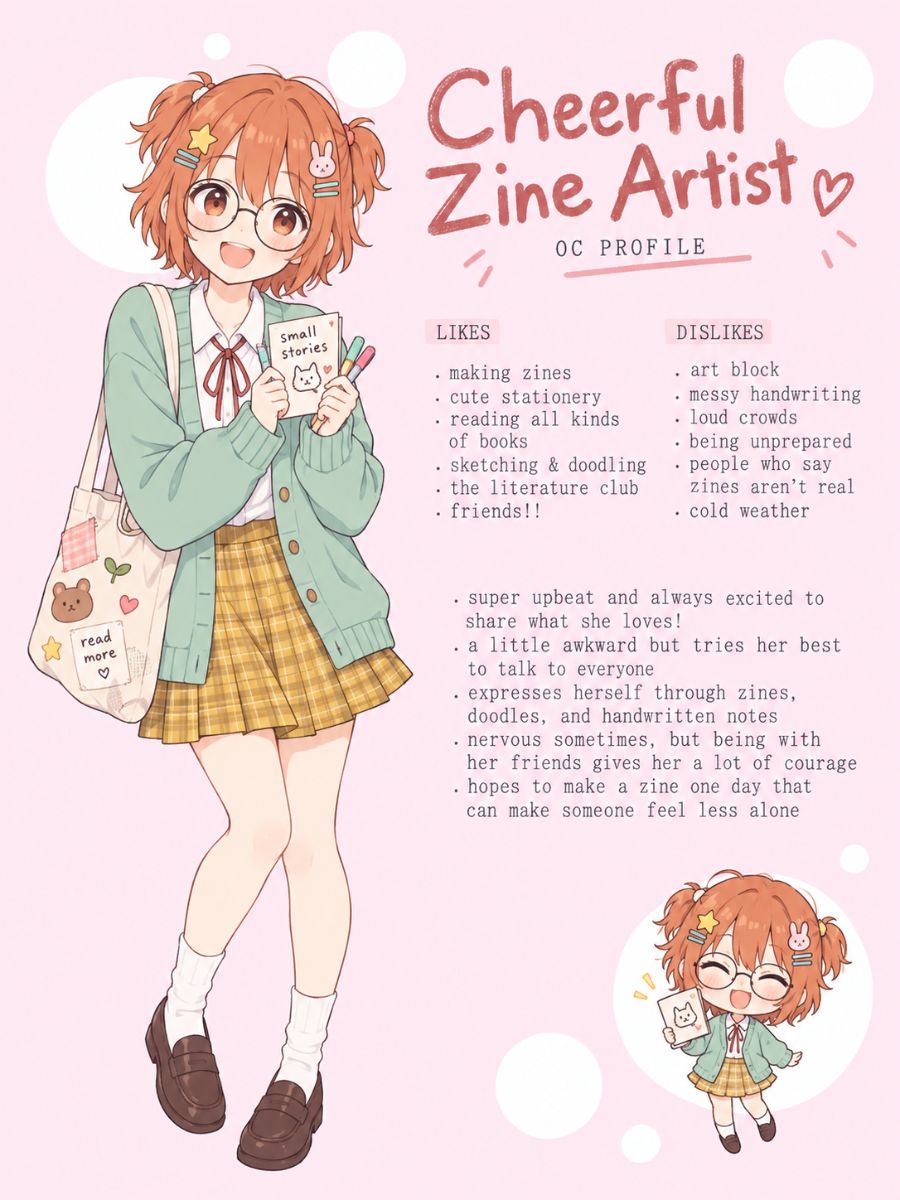
Cheerful Zine Artist
Key Features of Visual-Novel Literature Club OC Maker
Express Subtext Through Portraits
Generate an anime character portrait whose smile, eye direction, hand tension, and notebook grip suggest more than the dialogue says. The OC maker supports a clear club-member identity for profile art, dialogue mockups, and fan-made visual-novel concepts without copying an existing cast member.
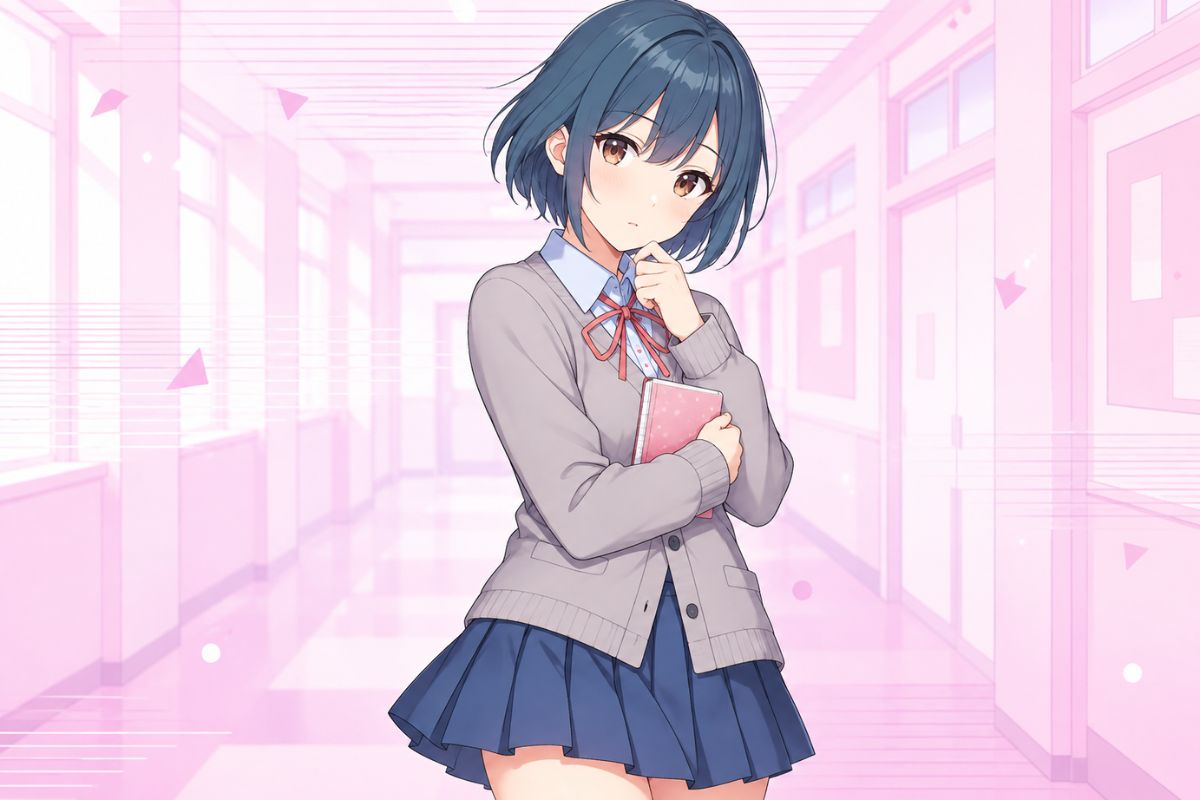
Style a Distinct Club Uniform
Create a school outfit that fits the literature-club setting while separating the OC through cardigan shape, ribbon treatment, socks, shoes, hair accessories, and one personal object. OCMaker AI turns those controlled differences into a polished full-body design suited to character references and scene planning.
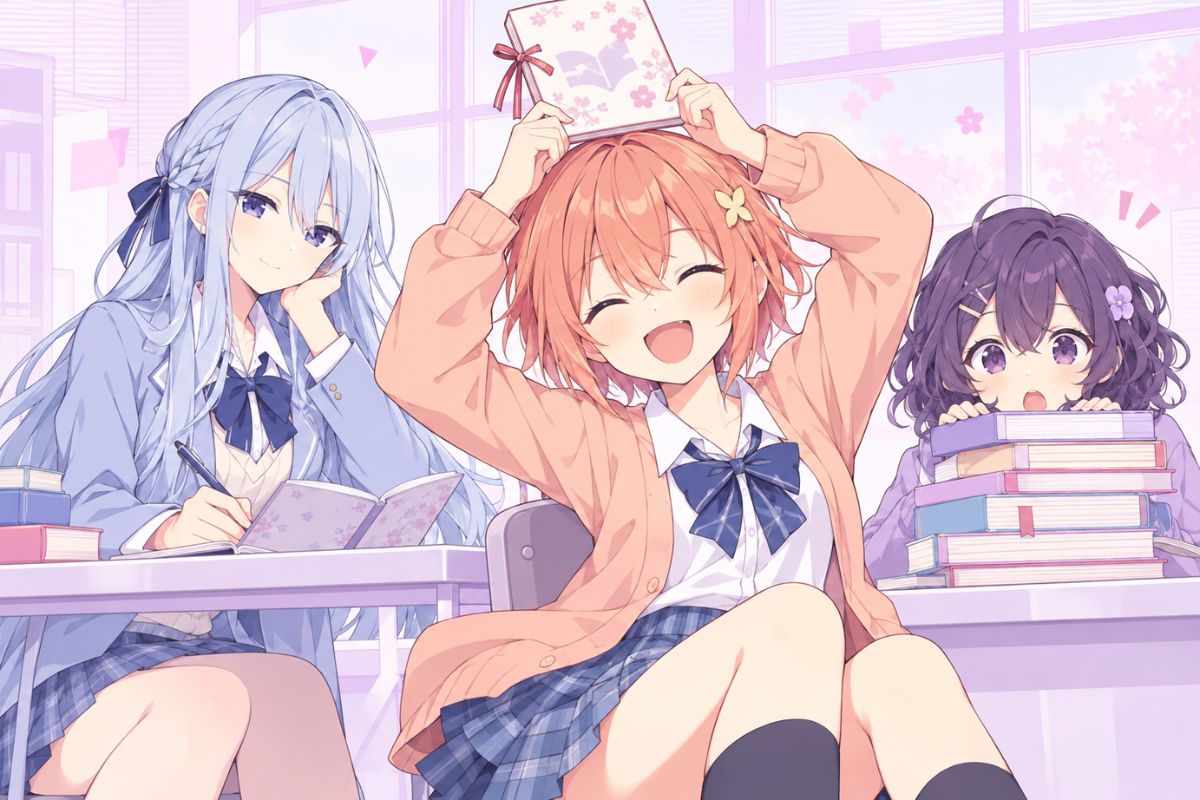
Visualize a Writing Motif
Produce character art built around a recognizable writing habit: color-coded haiku slips, ink-stained drafts, folded letters, surreal margin sketches, or a handmade poetry zine. An AI anime generator can help translate that motif into props, palette, lighting, and composition for a more specific result.
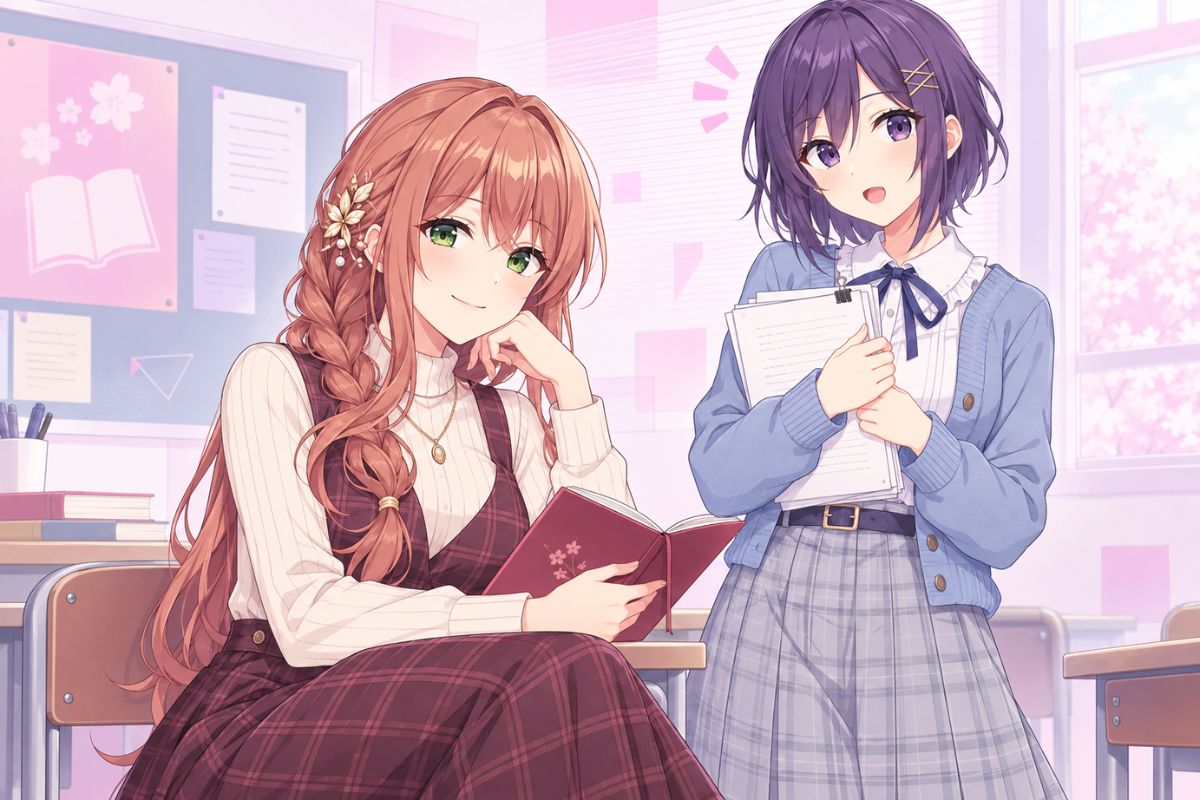
Frame Tension Behind Cheerfulness
Generate a bright classroom scene with subtle unease through an empty desk, a skewed shadow, an unfinished note, or a smile that does not match the pose. The result can function as a scene concept or dialogue backdrop while keeping the character central and avoiding gore, copied compositions, or unreadable clutter.
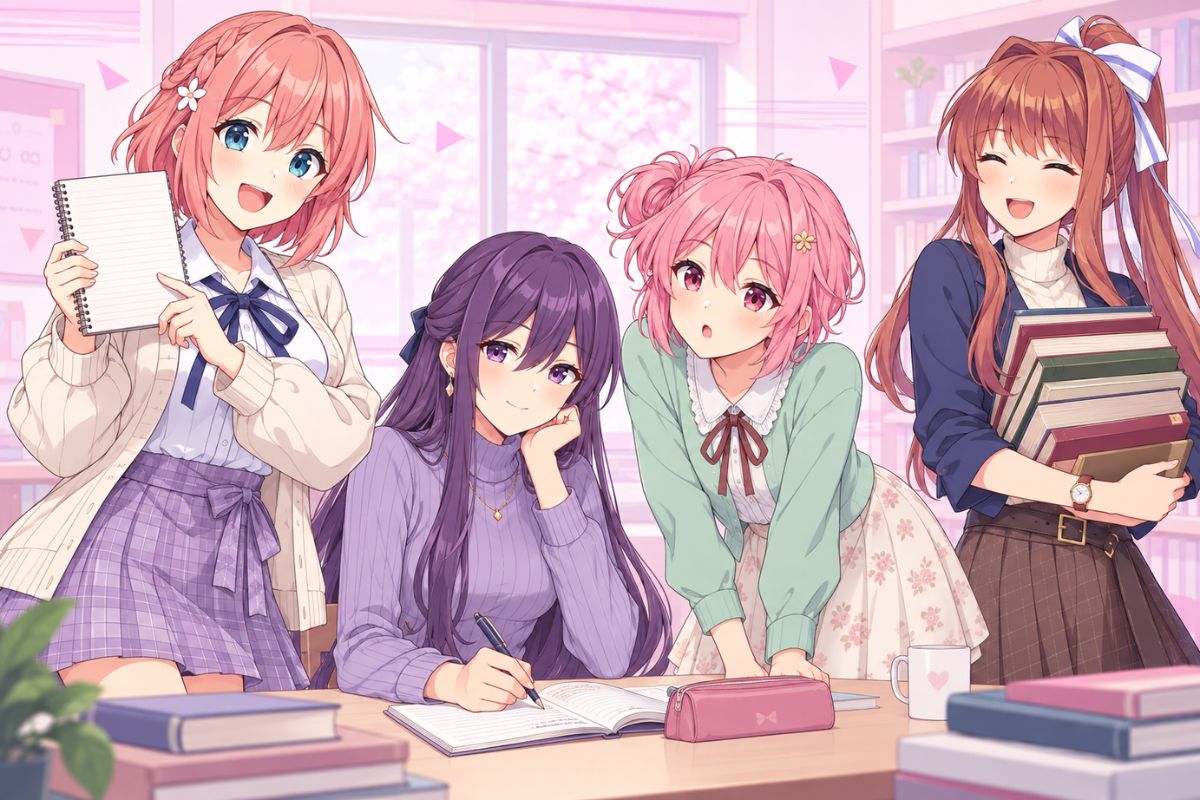
Control the visual details that make a fan-made club member feel specific on screen
What This Literature Club OC Maker Can Shape
Sprite-Friendly Body Language
Keep hands, shoulders, posture, and facial cues clear enough for dialogue-scene presentation.
Poetry-Led Color Palettes
Connect warm, pastel, muted, or ink-dark colors to the mood and imagery of the OC's writing.
Clubroom Scene Variety
Place the character at a desk, window, reading circle, poem exchange, or after-school performance.
Doki Doki OC Template
Turn a Doki Doki Literature Club OC template into visible hair, outfit, expression, prop, and pose choices.
Portrait and Full-Body Views
Generate close portraits for profiles or wider references that show uniform details and stance.
Original Fan Character Direction
Develop a fresh silhouette and personal motif instead of recreating a familiar hairstyle or costume.
Create a Literature Club OC in 3 Steps
Define the club presence, translate the poem into visual cues, and check the scene like a visual-novel frame
01
Assign a Club Presence
Decide how the OC behaves during meetings: careful editor, dramatic reader, zine maker, reluctant attendee, or another specific role.
02
Translate Poetry Into Design
Name one writing motif, then connect it to the palette, personal prop, expression, hairstyle, and uniform variation in the prompt.
03
Test the Dialogue Frame
Check whether the face, hands, notebook, and silhouette remain clear at visual-novel scale; simplify props or background details if they compete.
Helpful answers for OC templates, portraits, uniforms, poem motifs, and scene design